Cuban instructors have been the beating heart behind the global spread of Rueda de Casino. From Havana’s streets to dance floors on every continent, these maestros carry the authentic energy, rhythm, and history of the dance wherever they go. They are more than teachers; they are cultural ambassadors, ensuring that the soul of the authentic, Cuban Rueda’ isn’t lost as it evolves worldwide. By sharing not just the moves but also the stories, music, and alegría (joy) of Cuban dance, Cuban instructors help shape the standards and identity of Rueda abroad. Many international rueda communities look to them for guidance on technique, calls, and etiquette – essentially, Cubans have set the bar for how Rueda is taught and enjoyed globally. It’s no surprise that at major festivals, Cuban instructors often steal the show with their charisma and expertise.
One such instructor is Mario Acea, a Cuban Rueda de Casino specialist whose passion and pedagogy have left a mark from Norway to the Canary Islands. In this spotlight, we delve into Mario’s journey from a 14-year-old rueda enthusiast in Cienfuegos, Cuba – to become a sought-after, international instructor. We’ll see how he blends tradition with innovation – preserving the dance’s street-born spirit while embracing new ideas – and how he inspires students around the world with his infectious energy and deep knowledge.
Background
Contribution to Rueda de Casino
Mario Acea’s key contributions to the Rueda de Casino community lie in his commitment to preserving the dance’s Afro-Cuban roots while supporting its evolution on a global scale. Through his vibrant teaching style, deep musicality, and work with platforms like rueda.casino, he bridges traditional street-style rueda with international innovations. His dance school, Rumba Acea, reflects his passion for blending cultural authenticity with inclusive, forward-thinking instruction.
Further Reading and Resources
For more on Mario’s classes, performances and projects, follow his updates on social media and watch Marios contribution to rueda.casino to see him in action and learn.
Marios life and background
Mario Acea was born and raised in Cienfuegos, Cuba, a city with a proud dance tradition. From a young age, he was surrounded by the rich rhythms of Cuban son, cha-cha-chá, rumba, and more. It wasn’t long before those rhythms pulled him into the world of Rueda. In fact, Mario had his first encounter with Rueda de Casino at just 14 years old, thanks to a friend who urged him to join the weekend rueda circles in his neighborhood. “Un día me animé y fui r… tenía 14 años,” he recalls – one day he worked up the courage to start dancing rueda, at the age of 14. From that moment, he was hooked on the collective joy of the dance.
Growing up through the 1990s, Mario sharpened his skills in the vibrant social dance scene of Cienfuegos. He even went on to lead a local rueda de casino team in his hometown, demonstrating leadership and creativity early on. Over time, his passion led him to study dance more formally. Mario developed a strong foundation not just in casino (Cuban salsa), but also in Afro-Cuban folkloric dances and popular Cuban genres – the very ingredients that make Cuban Rueda so special. According to his official bio, he has “a strong passion for Afro-Cuban dance, rumba and the traditional popular dances like son, cha cha cha and mambo”, which he weaves into his teaching.
Fast forward to today: Mario Acea is based in Gran Canaria, Spain, where he runs his own project, Rumba Acea, and teaches almost every day of the week. Even though he’s far from Cuba geographically, he’s constantly channeling the spirit of Cuba in his classes. His journey has also included several years in Norway, teaching Cuban dance at various schools and events during his time there. Mario’s students and colleagues praise him as an educator who combines professional training with genuine street dance flair – a “popular teacher of Cuban dances and movements” known for his ability to break down techniques while keeping the atmosphere fun. In essence, Mario’s background blends the formal and the informal: he’s as comfortable performing with a dance company as he is calling a spontaneous rueda at a block party.
Journey Into Dance
Mario’s transition from an avid teen dancer to a professional was marked by a pivotal moment – a story he still recounts with pride. In his late teens, Mario answered an open call for dancers for a renowned folkloric ensemble (the Ballet Folklórico) in Cuba. He remembers this as “el salto del bailador amateur al bailarín” – the leap from amateur dancer to full-fledged performer. The audition was intense: about 100 hopeful dancers showed up, all vying for a coveted spot. Mario, with his mix of talent and that unmistakable Cuban energy, stood out from the crowd. In the end, the ensemble’s directors selected only two people out of the hundred – “una chica… y a mí” – one young woman (who would later move to Barcelona) and Mario himself. “Out of 100 people, they picked me. That’s where my professional career began,” he says, the excitement still evident in his voice. This was a life-changing milestone: joining the folkloric troupe not only honed Mario’s technique and stage presence, but also deepened his knowledge of Cuba’s diverse dance heritage, from Afro-Cuban rumba to elegant danzón.
With this success, Mario’s dance career took off. He spent the following years performing and training with various dance companies in Trinidad and Cienfuegos, immersing himself in both folkloric and popular Cuban dances. This period grounded him in the very roots of Rueda – since casino music and moves draw so much from folkloric rhythms and popular dance styles, Mario’s time in these companies gave him a well of inspiration to draw from in his future teaching. By the 2010s, Mario Acea had become a recognized dancer-choreographer in Cuba.
Opportunity knocked again when SalsaNor, a Norwegian salsa organization, invited Mario to teach, first in Cuba, to their students on dance holiday in Cuba two consecutive years, and later in Norway. In 2014 he accepted a one-year instructor contract with SalsaNor, which kicked off his international teaching journey. Moving to Norway was a big change in climate and culture, but Mario quickly made an impact there. He taught Cuban salsa and Rueda classes across different schools, and featured at national salsa festivals and the famed SalsaNor Rueda Congress. Even in a country as far from Cuba as Norway, students were drawn to Mario’s authenticity and enthusiasm EEventually, settling in Las Palmas de Gran Canaria, he’s become a central figure, sharing his expertise with both locals and visiting dancers. From teenage rueda rounds in Cienfuegos to professional stages and global congresses, Mario’s journey reflects a dedication to spreading Cuban dance without borders.
Teaching Philosophy
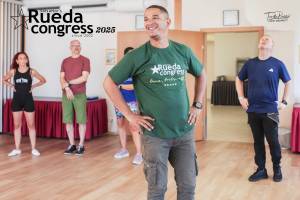
Mario Acea laughing while teaching a Rueda de Casino class at a SalsaNor Rueda Congress workshop. His genuine enthusiasm creates a fun, engaging learning atmosphere.
A core tenet of Mario’s philosophy is keeping the energy and spontaneity that make Cuban rueda so unique. “La energía… la bulla… eso no puede faltarnos,” he says – the energy, the famous noisy enthusiasm of Cubans dancing, cannot be missing. If you attend Mario’s class, don’t be surprised if he encourages whoops, claps, and call-and-response shouts. That “bulla” (joyful noise) is, in his view, the secret sauce that differentiates a Cuban-led rueda from a more reserved one. He teaches his students to feel the music with their whole body and to interact – to cheer when a cool move is pulled off, to sing the chorus of the song playing, to engage with the circle.
Importantly, Mario Acea champions improvisation and creativity within the rueda. He believes a caller (lead) should have the skill to invent a move or variation on the spot, and he encourages this in workshops. “La creación al instante… es algo que no puede perderse de la rueda,” he insists – being able to create something on the fly is something rueda callers must not lose. In his classes, once the basics are covered, he might challenge students to come up with a funky new variation or to try calling a sequence spontaneously. For Mario, this spontaneity keeps the dance alive and true to its street-dance roots. Rueda started as an improvised dance between friends, and he wants that spirit to thrive even as we codify and teach it.
Finally, Mario’s philosophy can be summed up by his reminder that Rueda is 100% a social dance. It’s not meant to be an exclusive choreography – it’s more about connection and fun than about perfection. As he counsels aspiring instructors, “recuerden que la rueda es una terapia; no podemos convertir la rueda en un centro militar donde todo tiene que ser perfecto y al unísono”. In other words: “Remember that rueda is therapy – we can’t turn it into a military drill where everything must be perfect and in unison.” This lighthearted approach does not mean he lacks rigor – Mario is a highly trained dancer – but it means he values joy and human connection over strict uniformity. In his classes, laughter and mistakes go hand in hand with technique and timing. By fostering this environment, Mario ensures that the corazón (heart) of Rueda – inclusivity, joy, and a bit of chaos – stays intact even as students progress in skill
Standardizing Moves
One of the biggest ongoing discussions in the global Rueda community is how (and whether) to standardize the names of moves. Different regions, and even different neighbourhoods in Cuba, might have their own names for the same figure. As Rueda has spread, so have these “dialects” of calls, which can lead to confusion when international dancers meet. Mario Acea has thought a lot about this challenge. He appreciates the effort to create a common rueda vocabulary, like SalsaNor has worked on the last 3 decades but his approach is nuanced. “La idea me está gustando cada día más,” he says about standardization – “pero…” there’s a but – “manteniéndola recogiendo mínimo tres nombres para cada figura”. In his view, any standardization should include multiple names (at least three) for each move. Why three names? Because Mario knows firsthand that casino is a street dance with regional variations, and he wants to respect that variety. The reason behind this approach ties back to rueda’s improvisational nature. “No es menos cierto que el casino sigue siendo un baile de la calle… el cantador en ese momento se le puede ocurrir la figura… mostrarla una vez y la segunda vez hacerla,” Mario explains. You might dance with people you’ve never met, and a caller could invent or call an unfamiliar move on the spot. Dancers have to quickly pick it up by sight. Mario worries that if we rigidly standardize everything, dancers might lose that adaptive skill – the art of catching a move from context and executing it on the fly.At the same time, Mario recognizes the practical benefits of having a more unified naming system, especially for teaching outside Cuba. Providing standard references can make it easier for non-Cubans to learn and join the fun without feeling completely lost or intimidated. It’s a fine line to walk: codify the dance enough to be inclusive, but not so much that it becomes rigid. Mario’s solution of documenting several popular names for each move is a balanced compromise – it preserves the local flavors (“variaciones regionales”) while enabling everyone to understand each other on a global dance floor.
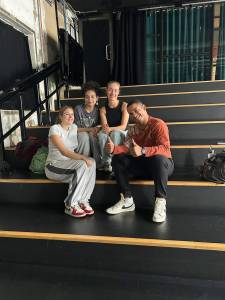
Mario Acea takes a break with a few dance students in a studio, flashing a thumbs-up and a warm smile. His friendly rapport with students is evident as they relax together between sessions.
In practice, Mario Acea contributes to projects (like this, the very Rueda.Casino platform) that work on cataloguing rueda figures and their aliases. He encourages his peers to respect each region’s terminology instead of insisting that one is “correct.” At the same time, he uses common universal calls when teaching international workshops, so that students from, say, Poland, Brazil, and the U.S. can all dance together. Mario often shares a fun anecdote: when he first traveled for workshops, he would call a move by the name he knew from Cienfuegos only to get blank stares – until someone said “Oh! That’s Sombrero doble!” or some other local term. Those moments taught him to always check for multiple names. Now he’s become something of a rueda linguist, collecting names of figures wherever he goes.
Ultimately, Mario believes standardizing (or rather, cataloguing) names is about bridging communities. It’s not to enforce one way, but to create a shared language that still honors where each dancer comes from. “Al mismo tiempo de estandarizar, estamos hablando de facilitar el baile… mientras se cumplan los patrones, mientras respeten de dónde viene, todo lo nuevo con respeto es bienvenido,” he notes. As long as the core patterns are respected and the roots are honored, he welcomes new ideas – including a global naming platform – with open arms. It’s a thoughtful perspective from someone who straddles the line between tradition and innovation daily.
Legacy and Impact
Over the years, Mario Acea has left a deep imprint on the Rueda de Casino community, particularly in Europe. His influence is perhaps most visible through his collaboration with SalsaNor and the international Rueda events they organize. During his stint in Norway and in the years since, Mario became a familiar (and beloved) face at the SalsaNor Rueda Congress, an annual gathering of rueda enthusiasts from all over the world. He has been invited multiple times as a featured instructor, showcasing authentic Cuban rueda to a global audience. In fact, at one congress in Graz, Austria, Mario turned out to be the crowd’s favorite Cuban instructor – participants just couldn’t get enough of his upbeat teaching style and engaging personality.
What alse makes Mario so popular at these events, is the fact that he also shines on the social dance floor. At congress parties, he’ll dance with everyone – no matter their level – spreading the joy of casino. Many recount how he would initiate a rueda circle in the middle of a party, spontaneously calling creative moves, making sure even newcomers were laughing and following along. His approachable, enthusiastic demeanor has effectively built bridges: students leave his classes not only more skilled, but also more inspired to embrace the Cuban way of enjoying dance.
Challenges and Triumphs
Every dedicated instructor faces challenges, and for Mario Acea, the central challenge has been one of balance: how to modernize and spread Rueda de Casino globally without losing its spontaneous, streetwise character. One ongoing challenge is exactly what we discussed earlier – standardizing without sterilizing. Mario has been candid that completely standardizing rueda calls could risk draining some magic from the dance.
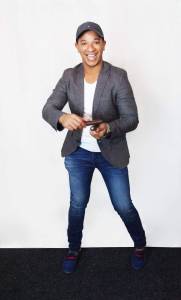
A playful Mario Acea. His lighthearted pose and broad smile reflect the vibrant personality he brings to his role as an instructor.
Another challenge has been the evolving perception of Rueda globally. As rueda’s popularity exploded, some places started treating it almost like a competition or performance showcase only, which can sometimes emphasize precision over fun. Mario often reminds dancers that in Cuba, “la rueda de la calle… tiene que mantenerse en la esencia en la que se comenzó” – the street-style rueda must keep its original essence – even as we take it to stages or teach in studios. He notes that in Cuba itself, the development of rueda somewhat “se ha detenido en el tiempo” (stalled in time) due to various factors, implying that much of the innovation is now coming from outside Cuba. This is a double-edged sword: on one hand, it’s wonderful that new ideas are flourishing abroad; on the other, there’s the challenge of ensuring those new ideas stay true to rueda’s roots. Mario’s triumph here is his open-minded attitude coupled with guardianship of tradition. “Bienvenido sea todo lo nuevo… mientras que respeten de donde viene,” he says – new developments are welcome as long as they respect where rueda comes from. By championing that philosophy, Mario has encouraged a generation of rueda enthusiasts to both innovate and pay homage. For example, he loves seeing creative formats like Rueda Switch, la llanta, or ruedas in dos líneas (two lines) gaining popularity – these bring fresh dynamics to the dance. “Me encantan todas, pero la que más me ha cautivado es la Switch,” Mario says; he’s captivated by Switch Rueda, and also really likes the “llanta” and two-line ruedas – those are among his favorites of the new ideas. Hearing that from him validates these innovations and is a triumph for the community: it shows that even a guardian of Cuban style appreciates evolution, as long as it’s done with sabor and respect.
Finally, on a personal level, one of Mario’s sweetest triumphs is seeing former students innovate. He beams with pride when a dancer he mentored comes up with a new twist or even an original move. Instead of feeling threatened by younger innovators, Mario feels joy. He mentioned how much he loves that people “siguen creando… cada vez más dinámica… me encanta lo que están haciendo”. Challenges remain – language barriers, generational gaps, regional rivalries over move names – but Mario Acea’s career demonstrates how to tackle these with a mix of passion, patience, and a genuine love for the dance and its community.
Conclusion
Mario Acea’s story is one of dedication to both the tradition and the evolution of Rueda de Casino. From his humble beginnings as a teenager sneaking into rueda circles in Cuba, to becoming a professional dancer and globe-trotting instructor, Mario has carried the torch of Cuban dance with him every step of the way. He is deeply committed to preserving the essence of Rueda – the communal joy, the spontaneous creativity, the Afro-Cuban roots and rhythms that give it life. At the same time, he embraces change and growth, understanding that for the dance to stay alive, it must continue to innovate and spread. Mario embodies the idea that you can honor the past while enthusiastically dancing into the future.
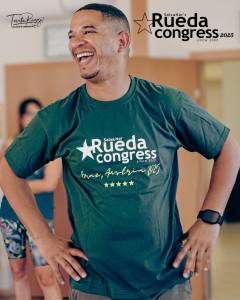
Mario Acea teaching at SalsaNor Rueda Congress 2025
In the rueda world, Mario is both a guardian and an innovator. He guards the core values: energía (energy), musicalidad (musicality), espontaneidad (spontaneity), and that down-to-earth street vibe that makes a rueda circle feel like family. And as an innovator, he pushes for things like standardized-yet-flexible terminology and applauds new formats like Switch Rueda. For readers and rueda enthusiasts worldwide, Mario Acea’s journey is an inspiration. It’s a reminder of why many of us fell in love with Rueda de Casino in the first place: it’s not just the moves, but the feeling of unity and happiness it creates. Mario often repeats that rueda es una terapia – rueda is a therapy – and watching him teach or dance, you understand exactly what he means. No matter where you form a circle, whether on a city sidewalk or at an international festival, if you carry that genuine Cuban energy and openness, you’re doing it right. Mario’s dedication ensures that this beautiful dance remains, at its core, a celebration of community.
If you ever get a chance to take a class or join a rueda led by Mario Acea, grab it. You’ll not only learn cool moves and improve your technique, but you’ll also laugh, sweat, holler “¡Dame!” at the top of your lungs, and come away feeling more connected – to the music, to your fellow dancers, and to the rich legacy of Cuban dance. Mario’s work continues, and he welcomes everyone into the circle. As he sees it, la rueda will keep spinning for many years to come, powered by both the old-school Cuban soul and the new ideas of a global family. So, whether you’re a seasoned caller or a curious beginner, keep dancing, keep innovating, and as Mario would say, “¡no pierdan la energía!” – never lose that energy.
¡Nos vemos en la rueda! (See you in the rueda!)


